
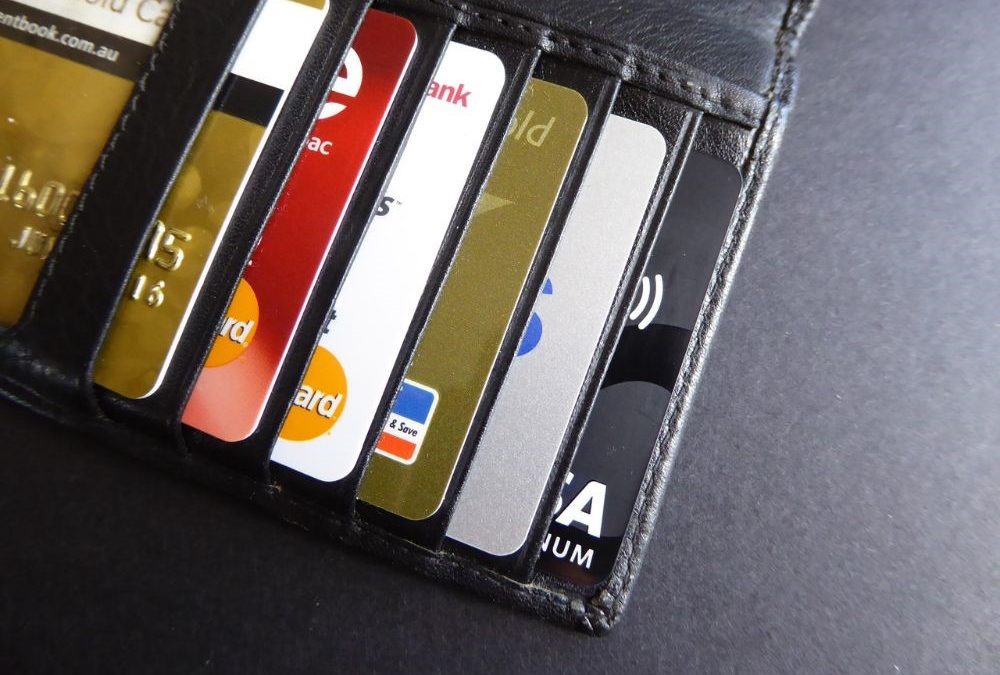
They’re both flat, plastic rectangles you can use to buy things at most places. Other than that, debit cards and credit cards are two very different items. Without knowing you, we can’t say which card is best for your unique financial goals and circumstances. Let’s help you choose by briefly touching on how each card works, and then explaining their relative differences.
What Is a Debit Card?
When you pay with a debit card, you are paying with your own money. Your debit card (aka check card, or bank card) is directly linked to the checking account you have at your bank. Your bank doesn’t charge you for using your debit card. Instead, they receive a small fee from the retailer.
A debit card limits you to spending your own money. In other words, you cannot spend more money than you already have – with one important exception. If you opt for overdraft, then you can spend until your checking account balance is a negative number. You will also incur a fee (usually around $35) for each overdraft.
What Is a Credit Card?
When you pay with a debit card, you are not paying with your own money. Your credit card purchase is directly funded by whichever bank or credit union issued your card. The institution which issued your card doesn’t charge you for using it (at the time of purchase). It does receive a small fee from the retailer, though.
A credit card limits the amount of money you can spend. Once you reach your credit limit, which may be as low as $100 or higher than $100,000 depending on who you are, you are effectively cut off.
The most important thing to understand about credit cards is how lenders collect revenue from them. If you repay a credit card within 21 days (usually, but not always) of receiving its monthly statement, then you will not pay interest. But if you wait longer to pay off credit card debt, then you will pay back the total amount you owe – plus interest.
As an example, suppose you have a credit card with an 18% interest rate. If you use it to purchase $1,000 worth of goods, and then pay off your debt in $100 monthly installments, you will ultimately pay the lender $1,091.57.
Debit Card vs. Credit Card: Pros and Cons
- Convenience: Tie – Debit cards and credit cards are both accepted by the vast majority of retailers. Both make paying for goods and services as easy as if you had cash on hand.
- Credit Building: Credit Card – Your credit score reflects how likely you are to pay back a debt. If you continually purchase items with your credit card – and regularly pay it off – then your credit score will increase to reflect your actions. Conversely, using a debit card does not demonstrate that you reliably pay off debts. No debt is created when you pay with a debit card, so it does not affect your credit score one way or another.
- Security: Credit Card – If someone steals and starts using your debit card, they are effectively stealing money directly out of your checking account. Any money the thief spends before you report the theft to your bank is not recoverable (unless law enforcement is involved, and that hardly guarantees recovery of stolen funds). Conversely, if your credit card is stolen, then you cannot be held liable for more than $50 (per the Fair Credit Billing Act of 1974).
- Debt Protection: Debit Card – If you’re doing everything you’re able to control your spending and avoid debt, then a debit card is best for you. If you don’t opt for overdraft – or have overdraft protection linked to a savings account – then you will be unable to spend more than your available funds can cover. Conversely, credit card debt can be easy to accumulate if you aren’t cautious. At the time of writing, Americans collectively owe over $1 trillion in credit card debt.
To summarize:
- If you are trying to build your credit score, avoid theft, or both, then you may prefer a credit card.
- If you are uncomfortable putting yourself in a situation where you could incur debt, then you may prefer a debit card.
Whichever kind of “plastic cash” you prefer, Sherburne State Bank is here to make spending easy. Our community bank serves Minnesotans for all their personal banking needs, and welcomes you to contact us or visit one of our locations in Becker, Monticello or Princeton, MN today!
Recent Comments